

Why do we save? What is the significance of saving? Is it still effective? In this article, we will address a highly critical topic and see whether we should continue saving or not. Some believe that saving under current conditions might decrease the value of capital and that inflation slows down its effectiveness. However, stay with us as we clarify the importance of saving across all periods.
In its simplest definition, saving means setting aside a portion of your income for the future. This may seem simple at first glance, but practically, it is one of the most important financial skills that can change people’s lives. Many do not resort to this simple and effective measure because they have no boundaries for their monthly expenses. Of course, there are those who possess an innate financial culture and commit to allocating a specific amount of money as monthly savings.
The importance of saving can be summarized as follows:
-
Securing a safer future.
-
Reducing financial stress.
-
Being more resilient in the face of unexpected events.
Those who neither save nor benefit from it are usually vulnerable to the slightest financial crisis, forced to resort to debt or ask others for help to meet their needs. Conversely, those who possess savings navigate crises with greater calm and do not lose control over their lives.
Savings are, in fact, an amount we allocate for unexpected events that may occur in the future. For example, God forbid, someone might suddenly lose their job or face exorbitant medical expenses. If they haven’t saved any amount, they will likely be forced to borrow, perhaps at high interest rates. In the worst-case scenario, they may be forced to sell their core assets, which is illogical.
A person who understands the importance of saving and regularly sets aside an amount of money (even if small) will face fewer financial problems, enjoy greater psychological peace, and be able to overcome crises easily and with minimal anxiety. Based on what we have briefly discussed, we can say that under current economic conditions, saving is a necessity, not an option.

Why is Saving Important?
The importance of saving cannot be summarized in a few sentences, as this healthy financial habit affects almost every aspect of individual and family life. We will examine the elements of saving to see just how vital it is.
1. Creating Financial Security for the Future The first and most important role of saving is providing financial security. When you allocate a part of your income, you are essentially creating a protective shield for times of crisis. Job loss, sudden illness, essential home or car repairs, and unstable economic conditions are all factors that highlight the immediate need for savings. Without it, these crises turn into a nightmare, forcing one into debt; with an emergency fund, managing these situations becomes much easier.
2. Planning for Future Goals Saving also allows you to plan for your future goals. Many believe saving is only for emergencies, while a large part of its importance lies in the ability to achieve dreams and financial targets. Buying a home, paying for your children’s education, investing in a business, or going on a dream trip—all require financial resources easily obtained from savings.
3. Reducing Financial Pressure and Creating Psychological Peace Saving plays a vital role psychologically. Financial support alleviates stress and gives a person a sense of tranquility and confidence. Knowing you have reserves for the next few months allows you to make bolder decisions in work or life because you aren’t worrying about every economic shift.
4. Providing Investment Opportunities Saving is the foundation upon which you can grow your assets. Without it, any investment would be perilous, as you’d have no way to compensate in case of loss. Thus, saving and investing are two sides of the same coin: one ensures security, the other achieves financial growth.
5. Family and Social Impacts A family that saves is less likely to fall into financial crises and enjoys better emotional and psychological relationships. Socially, a culture of saving enhances the resilience of the national economy and reduces the public’s need for government aid or expensive loans.

See also
Saving Assets
Many believe that cash is the only asset that can be saved. While cash is the most common form, there are other safe assets that can be used for savings, provided they are immediately liquid.
-
Gold: One of the most precious high-liquidity assets. It is excellent for long-term saving as it preserves value and grows. However, in the short term, due to fluctuations and potential difficulty finding immediate buyers during political crises, it may not be suitable as your only liquid emergency fund.
-
Mutual Funds and Stocks: These have relative liquidity, but accessing them can sometimes be difficult or time-consuming. During extreme crises (like the “Twelve-Day War”), stock markets might close entirely, preventing you from liquidating assets.
Our Suggestion to You We have a plan for you to achieve high liquidity while maintaining the value of your investments:
-
Diversify your assets: The core of any savings account is immediate access to cash. Therefore, a large percentage (50% or more) of your capital should be available in cash.
-
The 70/30 Split: You might keep 70% in cash for immediate liquidity and allocate 30% to assets like gold, coins, bullion, bonds, or stocks to fight inflation.
Important Note: The purpose of saving differs from investment. Investment aims for financial growth where liquidity isn’t the primary concern—profitability is. In saving, immediate liquidity is a more important criterion than growth, because the ultimate goal is peace of mind backed by emergency assets.
Principles and Techniques for Successful Saving
A. Prepare a Monthly Budget and Allocate Savings First The starting point is a clear, realistic monthly budget. Budgeting means knowing your net income and assigning a purpose to every riyal: rent, bills, food, transport, insurance, education, and most importantly, “savings.” Savings should not be “what is left over”; they should be included from the start (e.g., 10% to 20% of your income).
B. The “Pay Yourself First” Technique Instead of seeing what is left at the end of the month, set aside your savings the day you receive your salary. This transforms financial behavior from consumption to future-focus. Set up automated transfers from your salary account to your savings account to remove the temptation to spend it.
C. Use Separate Accounts for Savings A common problem is “spending leakage.” When emergency money is in the same account as daily expenses, boundaries fade. Use separate accounts: one for operations and several separate ones for specific goals (Emergency Fund, Travel, Education). This has a psychological purpose—every time you look at the balance, you are reminded of that specific goal’s value.
D. Controlling Small Daily Expenses Budgets often fail due to small, unplanned costs: coffee, streaming subscriptions, and impulsive online orders.
-
Wait 24 Hours: Before any non-essential purchase, wait a day to see if you still need it.
-
Audit Subscriptions: Cancel what you don’t use.
-
Meal Planning: Use a fixed grocery list to avoid impulse buys at the store.
-
The Time-Price Rule: Ask yourself, “How many hours of work did this purchase cost me?”
Common Saving Mistakes
To avoid these errors, we must first identify them:
-
Postponing Saving: Saying “I’ll start next month” leads to missing out on the power of accumulation.
-
Spending Your Entire Income: Living paycheck to paycheck is like walking a tightrope without a net.
-
Saving Without a Specific Goal: Without a destination, your motivation will eventually fade.
-
Relying on Loans Instead of Saving: Borrowing brings interest and stress; smart saving meets future needs debt-free.
Exploring the Differences Between Investment and Saving
While related, they differ in application:
-
Saving: Setting aside money in safe, liquid accounts. It is the foundation.
-
Investment: Using money to achieve long-term returns (stocks, real estate).
It is not recommended to engage in risky investments until you have an Emergency Fund covering 3 to 6 months of living expenses. Once that is established, surplus savings can be moved to investment vehicles for asset growth.
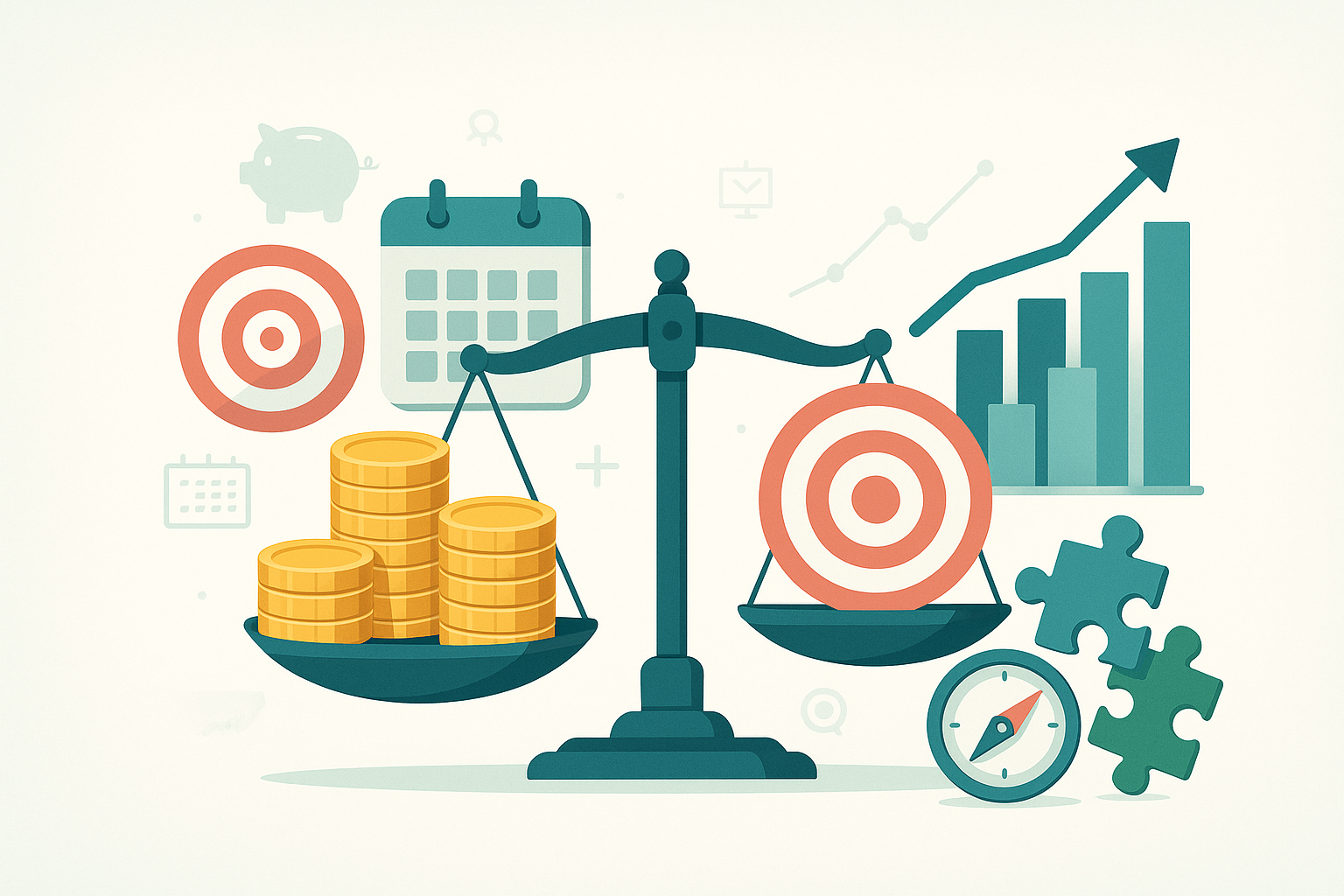
[Image comparing the risk and return of savings accounts vs. stock market investments]

Final Conclusion and Summary
Saving is the cornerstone of financial security and individual economic growth. It provides peace of mind, stability, and a path to bigger goals. The most important thing is that starting is more important than the amount. Even small daily savings yield impressive results over time. Start today: open a separate account and transfer the first amount, no matter how small.
FAQ
Why is saving important even for low-income individuals? Because even low incomes need a buffer; crises do not distinguish between the poor and the rich.
How much should we save? It is generally recommended to allocate at least 10% to 20% of monthly income, though this varies by individual circumstances.
What is the best way to start saving? The “Pay Yourself First” technique—allocating a portion of your salary on the same day you receive it.
Is saving enough without investing? No. Saving is fundamental for security, but you need investment to grow your assets and combat inflation.
What is an emergency fund and how does it differ from regular savings? An emergency fund is a specific savings account for unexpected expenses and must always be liquid and accessible.