

In light of increasing economic challenges and rising inflation rates, saving is no longer a luxury but an absolute necessity. However, for money to truly bear fruit, saving alone is not enough; it must be accompanied by a wise investment strategy. Middle-income earners face a unique challenge: how to build a strong and sustainable saving and investment plan that balances covering current expenses with the ambition for a secure financial future.
This article provides a comprehensive and expanded guide to building this plan, starting from budget rationalization to choosing the appropriate investment tools for a middle income.

Part One: The Solid Foundation – Establishing a Culture of Saving
A successful saving and investment plan cannot begin without establishing a disciplined financial mindset and a clear budget. Saving must be the top priority, not merely what remains of the income at the end of the month.
1. Defining Financial Goals (The Journey and Destination)
Your financial goals must be clear and time-bound to serve as the fuel that drives your commitment.
-
Short-term goals (1-3 years): Building an emergency fund, paying off fast-growing high-interest debt, or buying a car.
-
Medium-term goals (3-10 years): A down payment for a house, funding higher education, or a major tourist trip.
-
Long-term goals (over 10 years): Comfortable retirement, financial independence.
2. Budgeting: The 50/30/20 Rule as a Tool for Middle Earners
The 50/30/20 rule is the most suitable starting point for middle-income earners. This rule obligates you to distribute your net income (after taxes) as follows:
| Percentage | Category | Description and Goal |
| 50% | Needs | Rent, basic bills, essential groceries, minimum debt payments. |
| 30% | Wants | Entertainment, dining out, non-essential purchases. |
| 20% | Saving & Investing | Building the emergency fund, debt repayment, investing. |
Adjustment Note: If your basic expenses exceed 50% (which is common for middle incomes), you must work hard to reduce the “Wants” percentage (30%) and divert part of it to cover the gap, while maintaining the 20% for saving and investing as much as possible.
3. Applying the “Pay Yourself First” Principle
The 20% allocated for saving and investing should be deducted automatically as soon as the salary is received, before paying any other bills.
-
Automation: Set up an automatic monthly bank transfer from your payroll account to a separate savings account. This ensures discipline and prevents random spending on funds designated for the future.
4. The First Priority: The Emergency Fund
Before thinking about any investment, you must secure your financial safety net. A balanced saving and investment plan always begins with precautionary saving.
-
The Goal: Save an amount equivalent to 3 to 6 months of your basic expenses (rent, food, bills).
-
Storage Place: This amount should be kept in an easily accessible, highly liquid savings account. Even if the investment return is low, the goal here is safety and liquidity, not profit.
Part Two: The Investment Plan – Turning Savings into Wealth
After building an emergency fund and eliminating high-interest debt (because the cost of interest often exceeds any investment return), it is time to turn saving into investment. The goal is to beat inflation and increase the purchasing power of your money.
1. Determining Risk Level and Time Horizon
As a middle-income employee, you must be realistic about risk.
-
Long Horizon (Retirement): If your goals are far off (over 10 years), you can afford relatively higher risks because you have time to compensate for any potential loss. A larger portion can be allocated to stocks and growth funds.
-
Short Horizon (Buying a House): If your goals are near (3-5 years), you should focus on low-risk, highly liquid investment tools such as government bonds or money market funds.
2. Appropriate Investment Tools for Middle Income
You do not need a massive capital to start investing. Modern financial technology has opened the doors to investing with small amounts.
| Investment Tool | Description | Risk | Best For |
| Exchange-Traded Funds (ETFs) | Funds that track the performance of a market index; provide instant diversification at low costs. | Medium | Long-term investing (Retirement); ideal for beginners. |
| Individual Stocks | Buying shares in specific companies. | High | Investors with time and expertise for research; recommended as a small portion of the portfolio. |
| Real Estate Investment Trusts (REITs) | Allow investing in a large real estate portfolio without needing to buy an entire property. | Medium | Obtaining periodic income, dividends, and diversifying away from stocks. |
| Government Saving Bonds/Sukuk | Fixed-income debt instruments backed by the government. | Low | Capital preservation and medium-term goals. |
3. Diversification is the Buffer
Do not put all your eggs in one basket. A balanced saving and investment plan must include distributing your investments among different asset classes (stocks, bonds, real estate) and across various geographical sectors to reduce risk.
-
Asset Allocation Rule: A middle-income investor can start with a classic distribution such as $70/30$ (70% in stocks/growth funds, 30% in bonds/safe assets), adjusting this ratio according to age and risk tolerance.
4. Dollar-Cost Averaging (DCA)
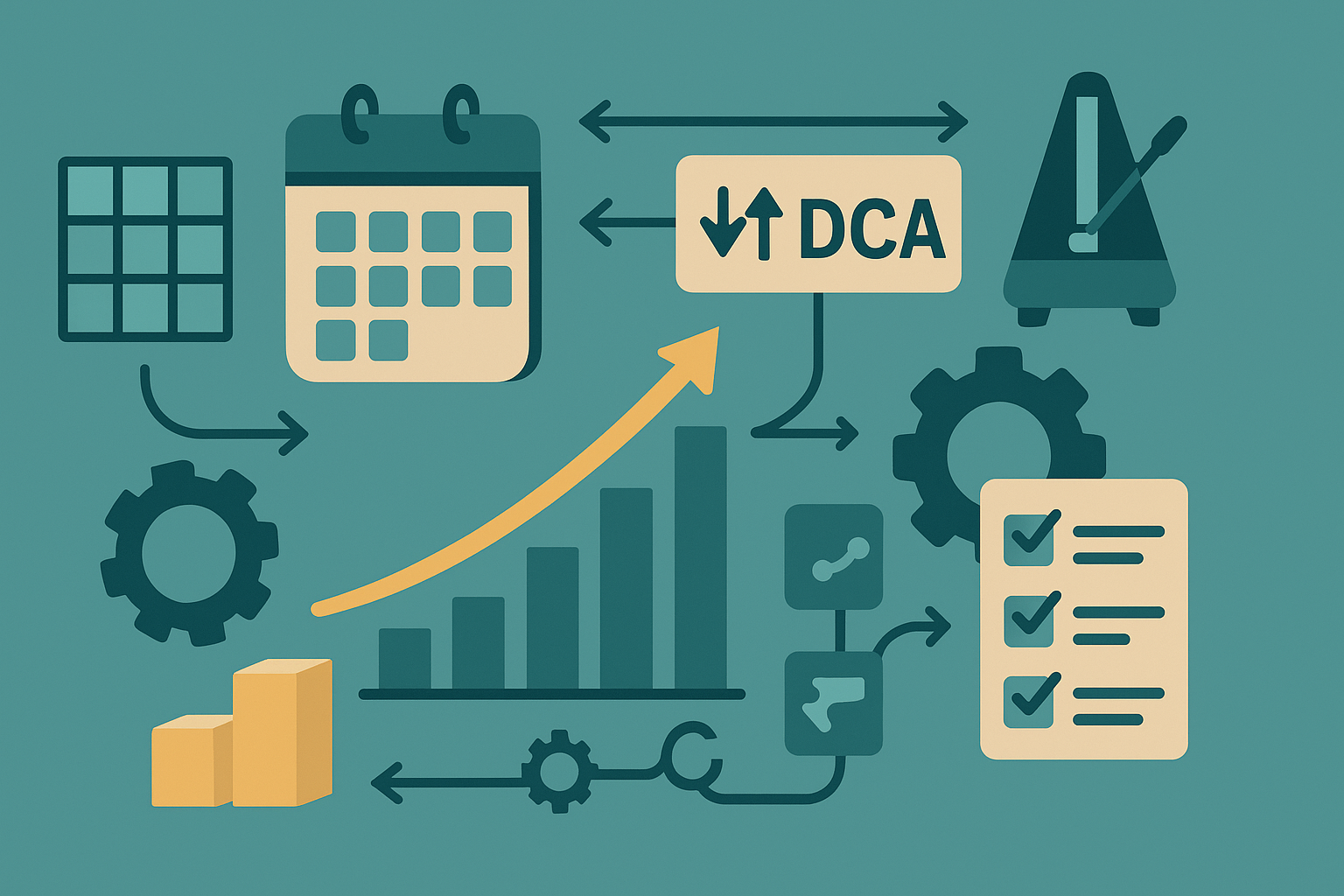
Instead of trying to time the market—a nearly impossible task—follow the Dollar-Cost Averaging (DCA) strategy.
-
The Mechanism: Invest a fixed amount (part of the allocated 20%) regularly (monthly) regardless of the asset’s market price.
-
The Advantage: This ensures that you buy more shares when prices are low and fewer when they are high, which reduces the average purchase cost over the long term and increases discipline.

See also
Part Three: Investing in Yourself (The Best Investment of All)
Middle-income earners often overlook an investment just as important as the financial markets: investing in human capital.
-
Skills Development: Allocating part of the “Wants” budget (30%) or an additional 5% of income toward skill development, obtaining professional certifications, or language courses. This investment leads directly to an increase in income, which is the strongest factor for enhancing a long-term saving and investment plan.
-
Income Improvement: Increasing monthly income by 10% has a much greater impact on your financial plan than trying to cut expenses by 10% alone. Invest to become more valuable in the labor market.
Part Four: Maintaining Balance and Review
A saving and investment plan is not a rigid document; it is a living process that requires periodic review and adjustment.
1. Annual Portfolio Rebalancing
Once a year, you must review your investment portfolio:
-
Asset Distribution: If stocks have risen significantly, you may find that the stock percentage in your portfolio has become 80% instead of the 70% target. You should sell part of the stocks and buy bonds to rebalance back to $70/30$. This ensures you are not taking more risk than you can handle.
-
Goal Evaluation: Are your financial goals still the same? Has your employment status changed? Saving and investment ratios should be adjusted based on life changes.
2. Avoiding “Lifestyle Creep”
As your income rises, it is natural for your expenses to rise as well. However, you must resist the urge to increase spending on “Wants” (30%) at the same rate as the income increase. Instead, direct 50% or more of the income increase toward your saving and investment plan to strengthen the 20% target.

Conclusion
Building a balanced saving and investment plan from a middle income requires, first and foremost, budget discipline and a commitment to the “Pay Yourself First” principle (at least 20%). It is a journey that requires patience, as the true power of this plan lies in compound interest, which works over long years without interruption. Start now with a small amount, invest regularly, diversify your portfolio, and most importantly, invest in developing yourself to increase your income. Through these methodical steps, a middle income transforms over time into a source of strength and financial stability that can lead to independence and wealth.