

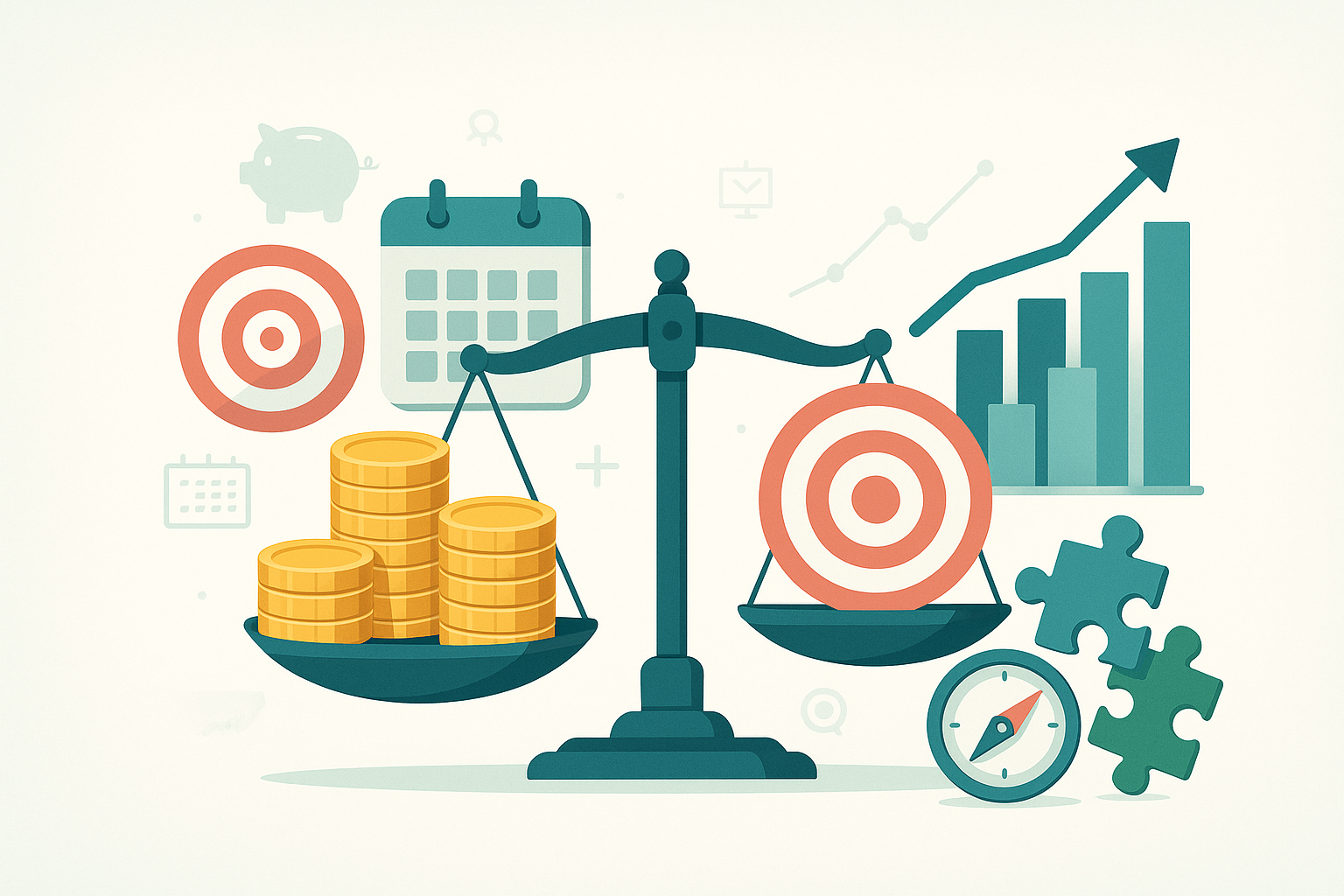

In a world where change accelerates and uncertainty mounts, the quest for the “best investment right now” remains the primary concern for investors, whether individuals or institutions. The rules of the economic game have changed radically in recent years; after a long period of low interest rates and moderate inflation, we are now living in an era characterized by high inflation, rising geopolitical tensions, and technological developments reshaping entire industries—led by Artificial Intelligence.
The answer to this question is not merely choosing a single financial asset (like a stock or real estate). Instead, it is a complex process requiring a deep analysis of the risks and opportunities inherent in the macro-economic environment. The best investment is not always the one offering the highest nominal return, but rather the one that aligns with an investor’s individual goals and risk tolerance, achieving real growth that outpaces inflation.
This article aims to provide a comprehensive and expanded analysis of the current investment landscape by deconstructing traditional and emerging asset classes and evaluating their attractiveness under current conditions. We will navigate from inflation-hedging strategies to investments driving the future, concluding with the most important and rewarding investment of all: investing in human capital.

Part One: Decoding the Current Macroeconomic Environment
To determine which assets will outperform, one must first understand the driving and inhibiting forces of the global economy:
1. Inflation and the High Interest Rate Spiral
What distinguishes the current phase is “stubborn” inflation, which has pushed central banks to raise interest rates to levels not seen in years. This situation has direct impacts on investment:
-
Erosion of Savings: High interest rates reduce the attractiveness of fixed-income assets (like older bonds) and increase borrowing costs for companies, squeezing profit margins and stock valuations.
-
Asset Correction: Rising rates have led to a correction in “inflated” asset valuations, particularly in the tech sector, which relied heavily on cheap financing and distant future growth.
-
Opportunity in Fixed Income: Bonds and fixed-income instruments have become more attractive now, as investors can obtain relatively good yields with lower risk than several years ago.
2. The Artificial Intelligence (AI) Tsunami and Sectoral Impact
Generative AI remains the most significant technological force. This is not just an evolution, but a radical structural shift.
-
Core Investment: Companies providing the infrastructure and key components for AI (such as advanced chip manufacturers, cloud computing firms, and big data providers) are the primary beneficiaries.
-
Late Winners: Companies that adopt AI to raise efficiency and cut costs, thereby enhancing their competitiveness and long-term profit margins.
3. Geopolitical Shifts and Supply Chain Reshoring
Tensions between major powers are driving the “reshoring” and “friend-shoring” of supply chains.
-
Investment Opportunities: This leads to massive investments in domestic manufacturing sectors, defense, cybersecurity, and strategic raw materials that previously relied on long, vulnerable supply chains.
Part Two: Reviewing Traditional Asset Classes in Today’s Context
1. Equities: Balancing Value and Sustainable Growth
In a high-interest-rate environment, selection must be precise and quality-based:
-
Value Stocks: Favoring undervalued stocks, especially in traditional energy, banking, and utilities sectors, which are often less sensitive to recession and offer good dividends.
-
Quality Growth: Instead of focusing on companies achieving growth “at any cost,” look for those achieving sustainable growth with Pricing Power to face inflation, moderate debt levels, and strong free cash flow.
-
Conclusion: The best stock investment lies at the intersection of Value and Quality, benefiting directly or indirectly from the AI and infrastructure revolution.
2. Fixed Income and Bonds: The Return of Attractiveness
After years of zero returns, bonds have returned to play their role as a capital preservation tool.
-
Short-Term Bonds: Currently considered a good investment as they benefit from high interest rates with minimal risk of value decline when rates rise (duration risk).
-
High-Quality Corporate Bonds: Provide better yields than government bonds with reasonable risk, serving as an important tool for portfolio rebalancing.
3. Real Estate: Specialization and Positioning
The real estate market was affected by increased financing costs, but demand remains robust in specific sectors:
-
Residential Rental Properties: Demand remains strong in major cities due to the difficulty of homeownership and rising housing costs.
-
Data Centers and Logistics: These are the best real estate investments currently. Data centers are driven by massive demand from AI and cloud companies, while warehouses and logistics are driven by e-commerce growth and supply chain restructuring.
-
Cautious Avoidance: It is preferable to stay away from traditional office real estate, which faces a structural challenge due to hybrid and remote work.
4. Gold and Commodities: Risk Hedging
-
Gold: Remains the ultimate hedge against inflation, geopolitical risks, and loss of confidence in fiat currencies. It should constitute a fixed percentage of any long-term investment portfolio.
-
Industrial Metals: Opportunities are concentrated in metals related to the Green Transition (like copper and lithium), as this transition cannot occur without a massive increase in demand for them.

See also
Part Three: Massive Growth Opportunities: Strategic Future Investments
To generate true wealth, one must invest in the long-term structural changes shaping the future.
1. Renewable Energy and Sustainable Infrastructure
Investment in renewable energy (solar, wind, green hydrogen) has received massive boosts thanks to global government support (such as the US Inflation Reduction Act) and environmental trends.
-
The Best Investment: Not just in power generation companies, but in the entire value chain: energy storage (batteries), energy efficiency technologies, and Smart Grids that need upgrading to accommodate variable energy. This is a politically and technologically backed investment.
2. Cybersecurity Technology
With increased reliance on the cloud and AI, the risk of cyberattacks has doubled.
-
The Opportunity: Cybersecurity has become a necessity rather than a luxury for companies. Investing in firms offering AI-powered security solutions and protecting cloud infrastructure is a par excellence defensive investment.
3. Deep Tech and Venture Capital (VC)
For high-net-worth investors with a high risk tolerance:
-
Promising Fields: Advanced biotechnology (personalized medicine), quantum computing, space technology, and sustainable food technology. These fields offer the highest growth potential, despite a lack of liquidity and high risks.
Part Four: The Most Important and Safest Investment: Human Capital
Whatever the economic conditions, there remains one investment that provides a guaranteed return and is unaffected by inflation or market fluctuations: investing in oneself and knowledge.
1. Upskilling for the Future
In the age of AI, routine jobs are being automated at a rapid pace. The best investment is acquiring skills that AI cannot easily replicate, or those that help direct AI tools.
-
Key Skills: Advanced data analysis, programming (e.g., Python), AI Prompt Engineering, critical thinking, and complex problem-solving.
2. Physical and Mental Health
Investing in health is not just a lifestyle choice; it is a smart financial investment.
-
The Return: Reducing future medical costs and increasing energy and focus levels, leading to increased productivity and the ability to make better investment decisions. Health is the foundation upon which wealth is built.
3. Building Networks and Expertise
Professional networking is social capital. Investing in building strong relationships and expanding your circle of acquaintances opens doors to investment and business opportunities (Deal Flow) not available to the general public.
Conclusion and Final Strategic Recommendation
There is no single “best” investment for everyone, but there is a best investment strategy for the current time. This strategy consists of a “Protected Diversification and Directed Growth” approach:
| Strategic Component | Goal | Recommended Assets |
| 1. Protection & Defense (Hedge) | Outpace inflation and protect against market volatility. | Gold, high-quality short-term bonds, logistics real estate. |
| 2. Directed Growth (Attack) | Capitalize on technological and energy shifts. | AI infrastructure stocks, renewable energy, cybersecurity. |
| 3. Human Capital | Ensure income continuity and adaptability. | Education, digital skill training, health. |

Ultimately, effective investing right now requires the humility to acknowledge market unpredictability, the courage to invest in the companies leading the future (AI and energy), and the wisdom to make investing in yourself the absolute priority. This combination is the best compass for an investor in the complex economic landscape of our time.